BEGIN:VCALENDAR
VERSION:2.0
PRODID:-//CiviCRM//NONSGML CiviEvent iCal//EN
X-WR-TIMEZONE:Australia/Melbourne
METHOD:PUBLISH
BEGIN:VTIMEZONE
TZID:Australia/Melbourne
BEGIN:DAYLIGHT
TZOFFSETFROM:+1100
TZOFFSETTO:+1100
TZNAME:AEDT
DTSTART:20261111T100000
END:DAYLIGHT
END:VTIMEZONE
BEGIN:VEVENT
UID:CiviCRM_EventID_643_87afcf8ad1d2169a8e71388807ef7005@www.playaustralia.org.au
SUMMARY:How Play Drives Public Spaces for Children Global
lessons and possibilities with Dr Sudeshna Chatter
jee
X-ALT-DESC;FMTTYPE=text/html:How Pl
ay Drives Public Spaces for Children
\n \n Global lessons and possibilities
\n \n
A FREE PUBLIC LECTURE
\n \n
About the Presenter
\n \n
Dr Sudeshna Chatterjee
\n \n <
p>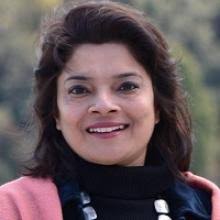 \n \n
Sudeshna is an
urbanist\, researcher and planning professional\,
recognised globally for her work creating inclusi
ve\, resilient and child friendly cities. She was
lead researcher and author of the Guide to Creatin
g Urban Public SPACES for Children (2026)\, the la
ndmark UN guidance jointly published by WHO\, UNIC
EF and UN Habitat\, and has since led UNICEF’s SPA
CES webinars for practitioners and city officials
worldwide. She also served on the expert working g
roup for General Comment No. 17 on the child’s rig
ht to play. She is Program Director for Research\,
Knowledge and Engagement at WRI India Ross Center
for Sustainable Cities\, where she led work infor
ming India’s first national urbanisation policy. S
udeshna is a member of the Executive Board of the
International Play Association (IPA World) and Edi
tor in Chief of PlayRights magazine.
\n \n R
ecent publications
\n \n WHO\, UNICEF and UN
Habitat (2026). Guide to Creating Urban Public SP
ACES for Children. Lead researcher and author.
\n \n Chatterjee\, S.\, Truñó\, M. and Schledor
n\, A. (2025). Planning for play: how are Barcelon
a and Regensburg using the approach and what have
they achieved? International Journal of Play\, 14(
2).
\n \n Chatterjee\, S. and Dutta\, C. (20
24). Healthy public spaces for children within nei
ghbourhoods through urban transformations. Cities
and Health.
\n \n About the Lecture<
/strong>
\n \n Why do some cities create pla
ces where children can play\, move about freely an
d feel they belong\, while others don't? Drawing o
n 50 case studies from 36 countries\, Sudeshna sho
ws how play drives the creation of public spaces f
or children\, from Regensburg and Mexico City to N
airobi\, and closer to home\, Melbourne's open spa
ce planning and Sydney's Darling Harbour Children'
s Playground.
\n \n Sudeshna's presentation will be followed by three inspiri
ng lightning speakers (5 minutes each) and then a
combined panel discussion. Join us for a thought p
rovoking discussion on How Play Drives Public Spac
es for Children.
\n \n When: Wednesday 11th
Novmeber 2026
\n \n Time: 10:00am to 11:45am
\n \n Where: Lecture Theatre 1
\n \n Wilkinson Building
\n \n
The University of Sydney
\n \n
148 City Road\, Camperdown NSW 2006
\n \n Presented by Play Australia in partnersh
ip with Flourishing Cities\, The University of Syd
ney
\n \n 
DESCRIPTION:How Play Drives Public Spaces for Children\n \n \n
Global lessons and possibilities\n \n \n
A FREE
PUBLIC LECTURE\n \n \n \n About the Presenter\n \n
\n Dr Sudeshna Chatterjee\n \n \n \n \n \n \n \n
Sudeshna is an urbanist\, researcher and planning
professional\, recognised globally for her work cr
eating inclusive\, resilient and child friendly ci
ties. She was lead researcher and author of the Gu
ide to Creating Urban Public SPACES for Children (
2026)\, the landmark UN guidance jointly published
by WHO\, UNICEF and UN Habitat\, and has since le
d UNICEF’s SPACES webinars for practitioners and c
ity officials worldwide. She also served on the ex
pert working group for General Comment No. 17 on t
he child’s right to play. She is Program Director
for Research\, Knowledge and Engagement at WRI Ind
ia Ross Center for Sustainable Cities\, where she
led work informing India’s first national urbanisa
tion policy. Sudeshna is a member of the Executive
Board of the International Play Association (IPA
World) and Editor in Chief of PlayRights magazine.
\n \n \n \n Recent publications\n \n \n \n WHO\, U
NICEF and UN Habitat (2026). Guide to Creating Urb
an Public SPACES for Children. Lead researcher and
author.\n \n \n \n Chatterjee\, S.\, Truñó\, M. a
nd Schledorn\, A. (2025). Planning for play: how a
re Barcelona and Regensburg using the approach and
what have they achieved? International Journal of
Play\, 14(2).\n \n \n \n Chatterjee\, S. and Dutt
a\, C. (2024). Healthy public spaces for children
within neighbourhoods through urban transformation
s. Cities and Health.\n \n \n \n About the Lecture
\n \n \n \n Why do some cities create places where
children can play\, move about freely and feel th
ey belong\, while others don't? Drawing on 50 case
studies from 36 countries\, Sudeshna shows how pl
ay drives the creation of public spaces for childr
en\, from Regensburg and Mexico City to Nairobi\,
and closer to home\, Melbourne's open space planni
ng and Sydney's Darling Harbour Children's Playgro
und.\n \n \n \n Sudeshna's presentation will be fo
llowed by three inspiring lightning speakers (5 mi
nutes each) and then a combined panel discussion.
Join us for a thought provoking discussion on How
Play Drives Public Spaces for Children.\n \n \n \n
When: Wednesday 11th Novmeber 2026\n \n \n \n Tim
e: 10:00am to 11:45am\n \n \n \n Where: Lecture T
heatre 1\n \n \n \n Wilkinson Buildi
ng\n \n \n \n The University of Sydn
ey\n \n \n \n 148 City Road\, Campe
rdown NSW 2006\n \n \n \n Presented by Play Austra
lia in partnership with Flourishing Cities\, The U
niversity of Sydney\n \n \n \n
\n \n
CATEGORIES:Free Public Lecture
CALSCALE:GREGORIAN
DTSTAMP;TZID=Australia/Melbourne:20261111T100000
DTSTART;TZID=Australia/Melbourne:20261111T100000
DTEND;TZID=Australia/Melbourne:20261112T114500
LOCATION:The University of Sydney\n Lecture Theatre 1\n Wil
kinson Building\n 148 City Road\n Camperdown\, NSW
2006\n Australia\n
URL:https://www.playaustralia.org.au/civicrm/event/info?reset=1&id=643
END:VEVENT
END:VCALENDAR