
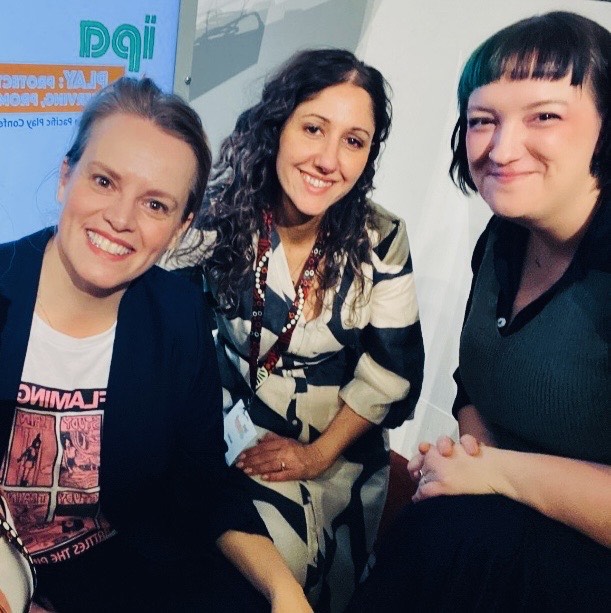
Encore: "Elevating Play" Dr Kate Renshaw, Nat Scira and Meg Ellard.
Have you heard "Encore, Encore" ??.. we did! Play Australia is hosting encores by presenters from the 2025 Asia Pacific Conference in this new webinar series.
Kate, Nat and Meg are generously going first in this Encore series for 2026!
Elevating Play Together: How Play Therapy Strengthens Development, Wellbeing, and the Global Play Movement
Dr. Kate Renshaw, Nat Scira, Meg Ellard
Monday February 23rd 2026 at 7:00pm (DST Sydney, Canberra & Melbourne)..
More than ever before, the world needs play in all its forms. With declining creativity and increasing mental ill-health and social isolation, play is an under-rated healing balm. Yet despite this urgent need, the word "play" does not currently command the gravitas needed to ensure it is prioritised in policy, funding, or practice.
What is Play Therapy?
Play Therapy is an evidence-based psychotherapy where trained clinicians use play, children’s natural language, as the primary therapeutic medium. Play Therapists undergo extensive training in child development, psychological theory, and specialised clinical skills through supervised placements. Unlike recreational play or play-based learning, Play Therapy provides therapeutic support through a Whole Child Development approach, addressing psychosocial, developmental and mental health needs.
Why This Matters to the Play Movement
Children experiencing trauma, disability, neurodevelopmental differences, or mental health challenges are often excluded from conversations about play rights and access. Yet these are the children who need play most — not just as recreation, but as a pathway to healing and development. Play Therapy demonstrates that play is not frivolous; it is powerful, and an essential health resource.
Children are not always able or willing to communicate through words, but play is comfortable and universal. Play Therapy is accessible, cross-cultural, neurodiverse-affirming, and developmentally sensitive. Play Therapists, trained in developmental, trauma-informed, and psychotherapeutic methodologies, are uniquely positioned to offer support that meets each individual child's needs.
The Challenge We Share
Both the play advocacy movement and the play therapy profession face the same fundamental obstacle: play is undervalued, underfunded, and misunderstood as "just" entertainment or frivolity. Major barriers exist for play receiving funding at research and community levels.
Our Shared Question
How do we collectively elevate "play" for the benefit of humanity?
This webinar explores how Play Therapists and play advocates can strengthen each other's work, creating a more unified voice that positions play as both a fundamental right and an essential therapeutic intervention.
Australia