
Australia's National Plan for Play:
A Framework for Children's Right to Play.
Australia, in 2026, is poised to lead the world in developing the first comprehensive national play strategy grounded in children's rights, building on our current strengths and driven by those who know play best -through a a cross sectoral representation of stakeholders across the country!
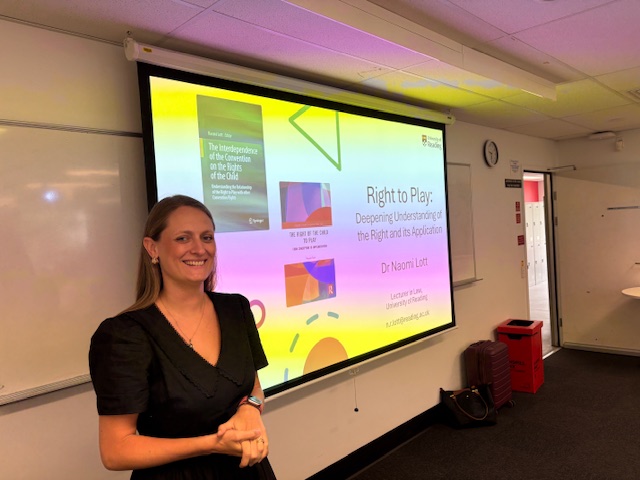
Building on Dr. Naomi Lott's internationally recognized framework addressing Space, Time, Acceptance, and Rights-Informed approaches to play, and anchored in Article 31 of the United Nations Convention on the Rights of the Child, this strategy represents a transformative approach to securing every child's fundamental right to play.
Round 3 Summits – 14-23 October 2026
with Dr Wendy Russell
"Exploring Play and Wellbeing and the Concept of Spatial Justice".
Perth: Thursday 15 October Time: 9.30 till 12.30 pm
Venue: Guildford Grammar School
Melbourne: Monday 19 October. Time:10:00am to 1:00pm
Venue: LIbrary at the Dock.
Brisbane: Thursday 22 October. Time: 9.30 - 12.30pm
Venue: Griffith University, Southbank.
Bathurst: Thursday 22 October. Time: 10.30 - 1.30pm
Venue: TBC
Sydney: Friday 23 October Time: 9:30am to 12:30pm
Venue: TBC
Some regional venues and other locations we are live streaming on Thursday 22nd October from Brisbane. Contact Info@playaustralia.org.au if you have a venue and would like to facilitate a session.
About Wendy
Dr Wendy Russell is a Senior Research Fellow and an independent researcher. Her research into children’s play focuses on the politics of space, and playwork. She is a co-founder of the biennial international Philosophy at Play conference and is on the editorial board of the International Journal of Play.
Critical cartography, as developed by Wendy, treats mapping not as a way of recording places but as a way of revealing the relationships, power dynamics and material conditions that shape opportunities for play. Through creative, deliberately ‘inefficient’ mapping, storying and diagramming, Critical Cartography helps practitioners to reflect on and reimagine play spaces, supporting more equitable, playful and responsive environments. Read more…
Wendy’s research into therapeutic playwork explores how children, playworkers, materials, animals and spaces come together to create conditions of safety, joy and self-directed play within therapeutic settings. By combining creative mapping with non-linear evaluation methods, it demonstrates the value of play as a relational, process-based form of care while providing meaningful evidence of its impact beyond conventional outcome measures. Read more…
Wendy has played a leading role in developing the Play Sufficiency Duty in Wales, creating practical, relational tools that help local authorities assess and improve the conditions that enable children to play. Wendy has guided play policy and practice in Wales and promotes play sufficiency internationally. Read more…
What makes this groundbreaking?
This is not a Government agenda, this is a community agenda.
This is not dependent on the whims of policy priorities by Government,
Through comprehensive national mapping, we will identify and celebrate existing play initiatives across Australia while revealing the gaps that demand urgent attention. This strategy recognizes that play is more than just playgrounds—it encompasses urban planning, design, educations, children’s services, health agencies, playgroups, pop up programs, and the countless ways children engage in self-directed play across diverse settings.
Across Australia, play is thriving in pockets of excellence and innovation. Yet not all children have equal access. For the first time, we will document play deserts—communities where children's access to play is severely limited—and expose patterns of spatial injustice that disproportionately affect our most vulnerable children.
We will use this to plan to drive the development of an action plan for advocacy and engagement from government and philanthropy.
This is more than research. It's a call to action.
Dual-purpose by design:
For the sector: A powerful advocacy tool that gives voice to the critical importance of play, backed by evidence and grounded in children's rights.
For government: A practical planning framework that identifies where investment is needed and provides clear pathways for implementation across local, state, and federal levels.
A collaborative vision:
Sector-driven and evidence-informed, this strategy will position Australia as a global leader in recognising play as essential to children's developmental and health needs and a critical element of childhood, centred on a rights based approach to access and acceptance.
Together, we can ensure that every Australian child—regardless of postcode, ability, or circumstance—has access to the play opportunities they need and deserve.
How will be do this?
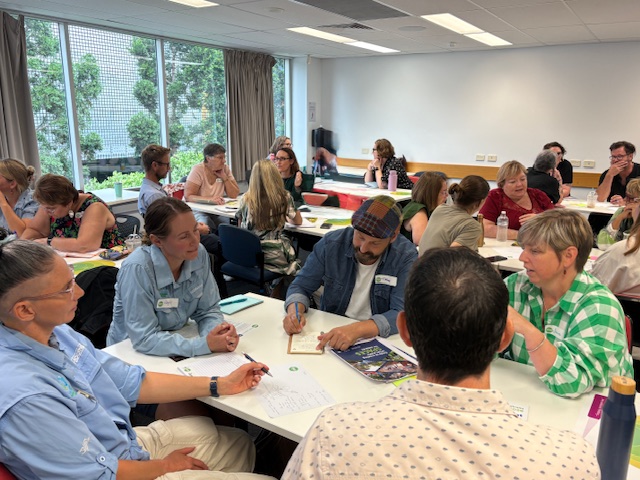
Commencing in February 2026, Play Australia will lead a series of summits and key stakeholder meetings and discussion groups to drive understanding and engagement of all stakeholders to establish a shared vision and blueprint for play in Australia. To do this we have to undertake a journey of exploration - we have to start to being everyone together to see what is happening internationally for play,
The first round of summits commenced in February 2026 and featured Dr Naomi Lott. Naomi will be supporting us to look at the UNCRC and the right to play and how we build a framework for play using a rights based approach. We commenced exploring vision and frameworks. This first set of summits set the foundation for future work. Naomi was joined by Play Australia CEO, Robyn Monro Miller who shared her findings from her 8 week Churchill Fellowship looking at international approaches to play policy and strategy across 8 countries and 18 cities and towns.
In August, a second round of Summits will feature more keynotes Scott McKenzie from Sport NZ sharing with us their Playbourhood Initiatives and how play is being embedded across participating local governments, along with key stakeholders in the Australian play sector. In this series we will be be doing a deeper dive into current initiatives, barriers, and the way forward, reviewing our earlier work and the questions that arose from the 1st series of summits. We are asking all participants to review the first report and give some thought to the questions raised.
In October, Dr Wendy Russell, will join us from the UK, for a series of events exploring Play Sufficiency and Spatial Justice. Wendy has been a key member of the research team for Play Sufficiency in Wales and England. This will cover what a plan needs to have to be actionable and how we identify and address play deserts.
Each series of summits will drive discussion and develop and formulate more of the strategy – it will be a slow burn to build interest, awareness, knowledge and develop partnerships.
It will be accompanied in 2027 by focus groups, nationwide surveys and collation of examples of practice that will support and drive change. We will not have a final plan to consult on until late 2027.
These summits have commenced as self-funded, via delegate registrations and in-kind provision of services and venues, but we hope to attract sponsors as we proceed. These sponsors will believe in the audicuous vision for an Australia where healthy communities are built through the power of play.
Read the Report from Round 1
Round 2 Summits – Monday 31st August to Thursday 10th September 2026 with Scott McKenzie, Sport NZ.
Report pending