
1) Message from the Executive Director - Barbara Champion
 As 2015 draws to a close, I wish to thank our members for their excellent and in some cases ground-breaking work during this last year in the development and promotion of quality play across Australia. I particularly want to thank our colleagues in South Australia who have run a number of excellent play forums this year, and will formally constitute as a Branch of Play Australia, to be known as PASA (Play Australia South Australia) in 2016. Thanks to Simon Bradley, Alicia Clutterham, Peter Semple, Amanda Balmer and Callum Anderson for their work in support of PASA this year. Partnerships with supporters of play in South Australia are growing by the minute, and we are very excited to have the first Branch of Play Australia established outside Victoria. We look forward to the development of similar operations throughout the country during 2016.The Annual General Meeting in October saw the retirement from the Board of Cathy Kiss. Cath is not departing the play community but is of the view that after 23 years of office, it is time. She has provided inspiration and leadership to the organisation over many years, for which we are all extraordinarily thankful. The new President is Sharon Sykes and the Treasurer Cormac McCarthy. More about the Board next year. The Annual General Meeting approved a new Constitution for the organisation which will enable and support the development of Play Australia into a truly national organisation. The Constitution is available on the website for all members.The Promoting the Value of Play Recognition Program was adopted by the Board and will roll out for members in 2016. This is a major shift away from the normal Awards type program as we wish to showcase the work of our members across Australia, in a non-competitive and non-time-consuming way, and to make it simple for our members to receive recognition for their outstanding contribution to play, and providing via the Play Australia website access for the public at large to our members great work. See below for details, and further information is on the website.Getting the Balance Right was released at the recent Local Government Play Network gathering in Geelong. The document has received wonderful feedback, and I wish to extend my very deepest thanks to Liz Cummins and Andrew Reedy, the authors of the document, and Mary Jeavons for her guidance and advice (and images) along the way. Much of this work was done on a voluntary basis, and thus our deep gratitude to Liz, and Andrew and our members who worked so hard on the development of the Case Studies in particular, which form an essential part of the document. In 2016 there will be a South Australia launch of the Guide in Adelaide on February 24 and a similar activity in Perth in early 2016. Arrangements for a launch and briefing in other states are currently being developed. Details will be provided as soon as they are available.
Our training continued successfully in 2015, and we would like to deliver these programs outside Victoria in 2016. My personal thanks to our presenters in all programs; Anne Houghton, Peter McLennan, Paul Grover, Ray Hutchison, Jason Hutchinson, Justine Osborne and in particular to Bron Joslyn who is now the Coordinator of the Early Years program, and to Rob Hamilton for his role in the 2 Day Playspace Development Program. Without you, we could not deliver the programs we do, so a big thank you to you all.Finally, my thanks to the Board for their untiring efforts in support of Play Australia, and to Renaee Churches, our website manager, Membership Officer, and the brains and skill behind all that we achieve electronically!Best wishes to you all for a wonderful Christmas and New Year, and I look forward to working with you in 2016.
2) Getting the Balance Right - our new Guide for Risk Management
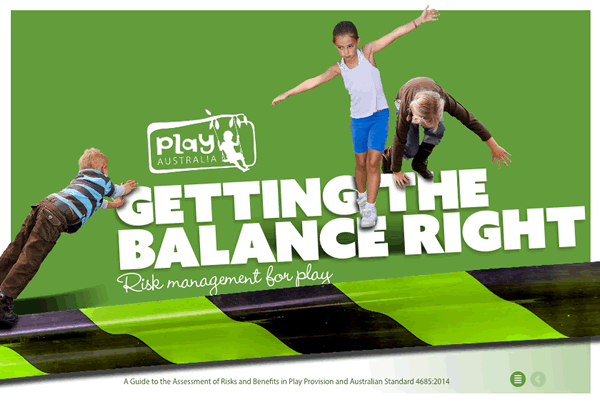 Children and young people’s access to free space for play is rapidly shrinking. Never is this more obvious than in urban areas in Australia where most of us live. For many children and young people designed environments such as public parks, school grounds or early childhood play areas are their main opportunities for outdoor play. This means increased responsibility for you, the play provider to provide high-quality, well-maintained play opportunities and play environments that reflect the needs of the children and young people and their families in your community.
So what is your role in this? Play providers tend to come from a diverse range of backgrounds, with wide and varied interests and expertise in play and play environments. Whether you are in local government or early childhood, or part of a school community our responsibility to provide high-quality, well-maintained play opportunities and environments remains the same. So how are we best to approach this somewhat daunting task?
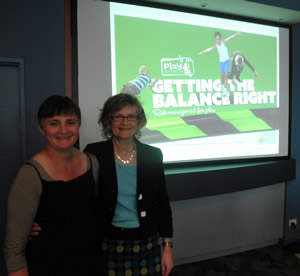 This guide encourages you to take an objective, balanced approach to play provision and risk management and as such is presented in two complementary parts; Part A. Risk / Benefit Assessment and Part B. Australian Standard AS: 4685-2014 Ready Reference. The purpose of presenting these two parts together is to give you confidence in using a truly ‘best practice’ approach to the design and management of your play environments. An approach that not only demonstrates an effective knowledge of the standards, but also asks the right questions about what makes a play environment great, in terms of play value.This guide asks as many questions as it answers, its aim is to get you thinking about what you do and how you do it. Ultimately by presenting these two parts together, we hope to deconstruct the singular reliance on standards or regulations for decision-making related to play environments. Public safety is an important issue, but not the only issue at stake here and we hope that by reading this guide, you will become better acquainted with what makes a high-quality, well-maintained play environment and more confident to provide better play opportunities for children and young people and their families in your community into the future.
Getting the Balance Right will make an excellent contribution to the ongoing development of outdoor play in Australia, I hope that you find it of value too.The Guide is available for download by all Play Australia members at no cost and for non-members for $112.00 incl. GST. All members have been sent an email providing a password to enable you to download the document from the provided link. All non-members have been sent an email indicating the cost ($112.00 incl. GST) of the document and details of the payment process prior to providing download details. If you have not received the information please email barb@playaustralia.org.au
3) Recognition Program
The Board of Play Australia wishes to advise all members of the introduction of our new Promoting the Value of Play Recognition Program, the purpose of which is to celebrate the excellent play work undertaken in this country, and to showcase this work, to the community at large.Members will recall that Play Australia for some years collaborated with PLA (Parks & Leisure Australia) and AILA (the Australian Institute of Landscape Architects) in an Awards program and it is with this experience, and the knowledge of our membership that it has been agreed to introduce this new program which is non-competitive, non- labour intensive, and will through its operation promote and advocate for quality play. Objective:To develop a Play Australia (PA) membership recognition program to acknowledge and congratulate PA members for outstanding achievement and excellence in their field of work in the promotion of the value of play. Promoting the Value of Play Recognition Program (Recognition Program) will celebrate people and projects that enhance the outdoor play experience for children, families and communities. To develop the Play Australia website as the “go to” website to see the latest innovative and quality playspaces and play practices in Australia.Aim:
- The Board believes it is important that PA members are recognised for innovation, creativity, best practice and successful projects, within their field of work, in a non-competitive environment.
- Nominations will be encouraged to include people and projects from different contexts, environments and business endeavours with high and low budgets.
- The Recognition Program will promote a significant understanding of the importance and value of play within the wider community and the play sector itself.
- The Recognition Program will improve business success for recipients with increased personal and professional recognition of their work.
- The Recognition Program will cultivate a source of credibility and prestige, and be sought after by those in the play sector. A successful nomination will be deemed an achievement and demonstrate members who are committed ambassadors of quality play opportunities that benefit the wellbeing of children.
- Recipients of an award must be a PA member, thus providing a marketing tool to increase membership.
Administration:
- the Board will appoint a Recognition Committee that will be responsible for the review of nominations at suitable intervals (minimum of twice yearly), reporting to the Board as necessary;
- the Recognition Committee will have a minimum of 4 and maximum of 6 people, one of whom must be a Board member and including up to two children;
- the Recognition Committee may include non-Board members, but all members of the Recognition Committee will be a Play Australia member (except children);
- where practical a majority of the Committee members should visit the site, meet the person(s) or observe the activity being nominated;
- if necessary State based Recognition Committees may be formed to provide local consideration, with the approval of the Board;
- successful nominees will be recognised through opportunities such as the website, newsletter, media releases, forums, AGM and Annual Report and will be presented with a suitable memento;
- the logo for the Recognition Program will be a coloured kite (To be designed).
Criteria:
- the Recognition Committee will develop selection criteria and a corresponding nomination
- form to be distributed to all PA members on a regular basis and via the website;
- the Recognition Program is to be non-competitive and nominations will only be judged against the selection criteria;
- to nominate for an award the person/organisation must be a Play Australia member;
- members of the Recognition Committee will not nominate anyone for an Award and any conflict of interest must be declared.
Nominations:
- nominations can be submitted by a Play Australia member themselves or by external people;
- there will be no limit on the number of awards each year;
- nominations can be received throughout the year and the Recognition Committee will meet at least 2 times a year to determine the successful nominations;
- nominations to be submitted by CD/USB in a format to be decided to enable easy processing onto the website. Nominations can also be submitted through our website;
- all successful nominations will be displayed on the website in a dedicated page.
Nomination Selection Criteria
- The nominator must be a current financial member of Play Australia (individual or organisation);
- The activity must have occurred or been completed within 12 months of nomination;
- The application must promote the value of play by:
- identifying and demonstrating that the target audience has been successfully reached;
- detailing where and when the activity or project occurred;
- identifying how the project or activity was delivered, including all partners, stakeholders and contributors;
- demonstrating the outcomes of the project or activity, both positive and negative;
- the participation of children and other key users;
- detailing rationale and guiding principles e.g. Strategies, Master Plans, Policies;
- listing the budget and funding sources, including ongoing costs if required;
- endorsement of all project partners (signed authorisation if nominating a third party); and,
- evaluation of the project or activity and how it will be monitored in the future.
Nominations will not be considered that are singly for a commercial product or service on their own but can be considered as part of broader project or activity.
4) Peter Semple at play in Northern Ireland
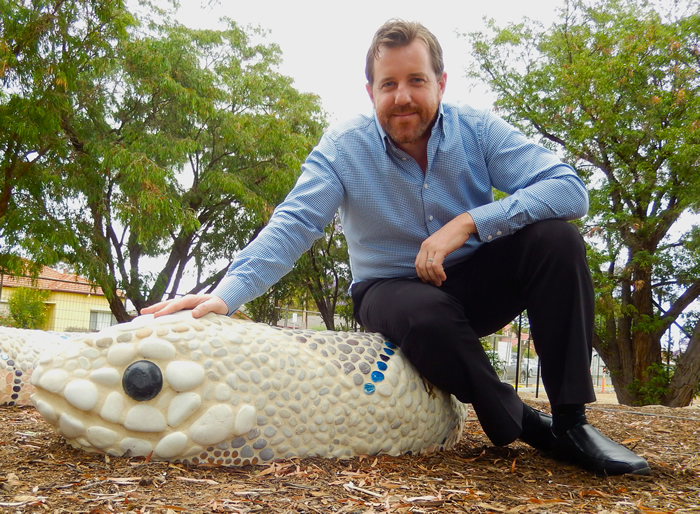 Northern Ireland for a long time has had a very negative image on the international stage for religious violence that continually divided its communities. But for someone that grew up there during these dark times; play for me was pivotal for building friendships and removing religious mistrust, it was the catalyst to opening my eyes to positive opportunities.This small pocket of the British Isles holds some breathtaking natural landscapes that were once my playground. I remember feeling extremely spoilt by the diversity and freedom that we had on our doorstep. It truly allowed us to grow wild and escape the headlines that would have weighed heavy on our parents minds.Fortunately those dark years are just a memory and with much needed investment the towns and surrounds are portraying a life of normality and hope for the future. A real obvious shift has been the investment in play provision and advocacy with our sister organisation Playboard NI carrying the torch. Play has correctly been acknowledged as a vital driver in creating happier and healthier communities. It is also seen strategically seen as ways to bring in visitors to the region and relabel areas positively that have suffered during the many years of the troubles.On a recent return with my young family it was an ideal opportunity to relive my childhood memories with my own children and also to discover and meet the champions and advocates for children’s play. Playboard NI CEO Jacqueline O’Loughlin kindly agreed to catch-up and took me on a study tour of newly completed play projects.On the study tour we were joined by Alan Herron Director of Service Delivery & Development; Lisa O’Conner Communications Officer, Shauneen McCusker Play Development Officer and last but certainly not least was Harry Harbottle, Chair of Play Scotland who was able to take the short boat trip over from Scotland for the full days outing.First stop on the road was Slieve Gullion Forest Park and the magical world of The Giant’s Lair.
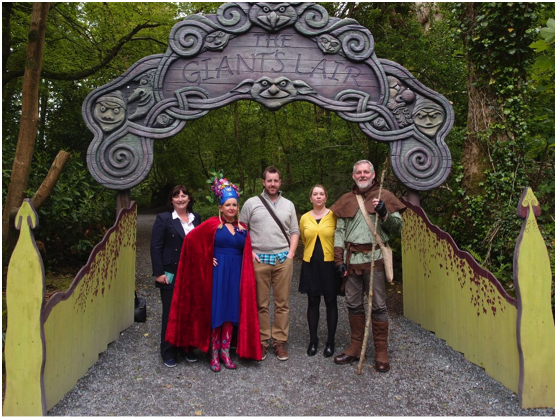 On our arrival we were greeted by Julie McCann from Newry, Mourne and Down District Council who guided us through the project. The Giant’s lair is everything a young child would want. The experience is laid out as a trail with make-believe and imaginary elements strategically scattered along its 2km route. This is a world of fairies, goblins and giants. The elements are subtle and blend with the natural setting both complimenting and bringing an imaginary world to life. This project is a combination of local government and forestry service reinventing a standard walking trail into an unfathomably popular destination. The real genius behind the creative landscape is a local arts group that specialise in nurturing Children’s participation, creativity and imagination. Not only do they bring detail to the built elements but they also provide role playing tours for young children that further immerses them into a world of possibilities.The Giants Lair is the combination of a number of different projects that have been devised at Slieve Gullion over the years. The combination of using the arts and the woodlands to create a high quality play facility for children is a perfect and natural combination. The project also is a way of promoting the mythology and natural heritage of Slieve Gullion and south Armagh in a positive way and will open the area to a new generation of visitors creating much needed revenue to the local business community.
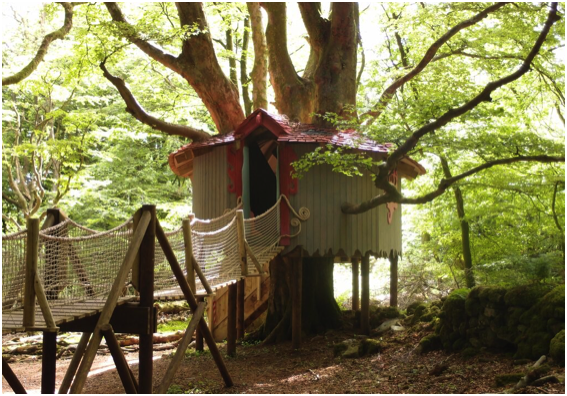
After leaving Slieve Gullion a 30min drive north took us to our second and third stop The Animal Wood at Castlewellan Forest Park and The Big Deer at Tollymore Forest Park. Both projects shared very similar objectives to the Giants Lair but a little more structured in form but still blend naturally with their surroundings. Boyd McClurg form the forestry commission explained that they had partnered with the council to create custom playgrounds that would represent the sense of place through cultural and natural narratives. The aim was to create a family destination that would appeal at a regional level, bringing a new demographic that would foster a connection at first to the playspaces but in time to the wider landscape. This would also form an economic benefit to the region through repeat visitation.Boyd explained that children like to explore and use their imagination. The natural environment around the play spaces changes with the seasons and offers different opportunities to play creatively. There are things to be seen from the first time in spring that can be chartered through the seasons. Carvings and forms of animals help connect with wildlife. The real environment which can include brambles as well as wild flowers can teach kids about both beauty and boundaries in nature.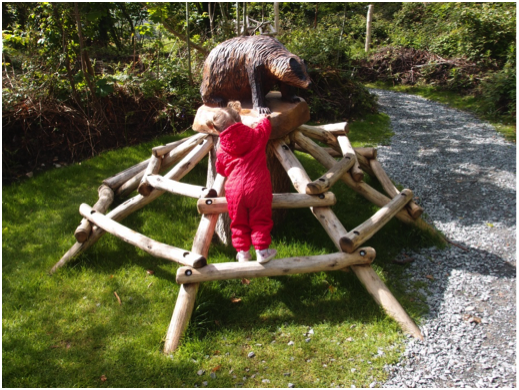
5) Training Plans for 2016
The training program for 2016 is now listed on our website, with registration opening in Feburary 2016.
We plan on introducing a program in 2016 to inspire and inform our design members, on risk management and the soon to be published Part 0 of AS4685-2014 on Development, Installation, Inspection, Maintenance and Operations. Watch this space for further details.We hope to provide support to the schools sector and to extend knowledge and understanding to Local Government on Open Space Planning.
6) Level 1 Training Programs, Part 0
2015 saw the introduction of Level 1 Training as per the recommendations in the soon to be published Part 0 of AS4685-2014 on Development, Installation, Inspection, Maintenance and Operations. This training can be received by participation in the 2 Day Playspace Development Program in Melbourne or by participating in a 1 Day onsite program delivered by Play Australia. This year training was delivered on site at the Baw Baw Shire Council and the East Gippsland Shire Council and Play Australia is very keen to talk with rural councils in particular about the potential to deliver training on site for all staff who work in parks and playgrounds.2016 will see the introduction of Level 2 training, details to follow. Play Australia supports the Level 3 training program provided by David Eager, the Chair of the Playgrounds Standards Committee and the University of Technology.Training opportunities can be developed for delivery outside Victoria in 2016 by negotiation.
7) 7 Senses Day 2015 : Creating connected, sensory focussed communities from coast to coast
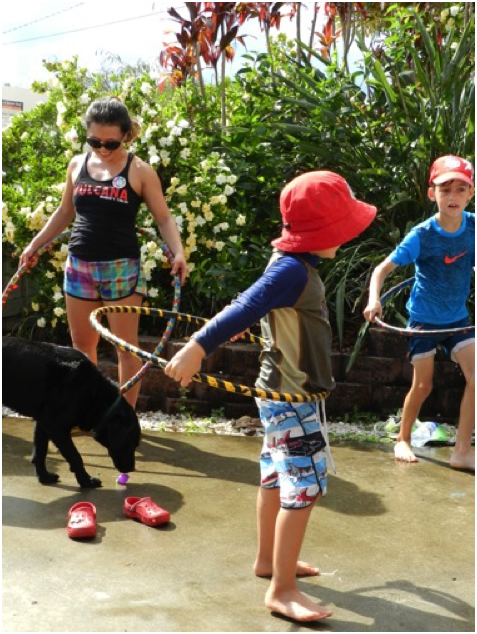
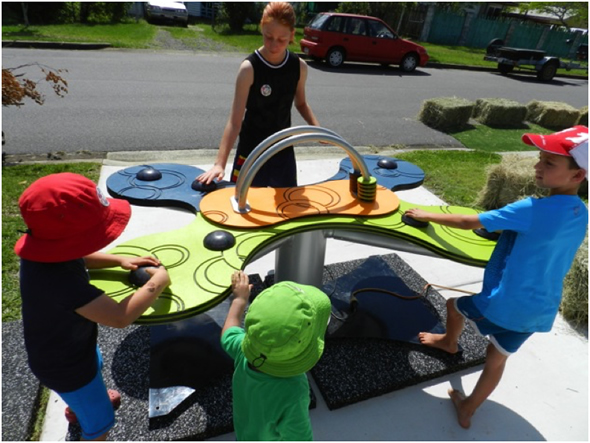
The 2015 7 Senses Day temporarily transformed public spaces from coast to coast on Saturday 7 November 2015, with significant sensory interventions “popping-up” Perth, Adelaide, Brisbane and Cairns. More than 500 residents across the country participated in 7 Senses Day activities and interventions that sought to engage our seven human senses and create safer, more playful and inclusive communities.Now in its third year, the annual 7 Senses Day encourages residents and place makers to invigorate a local community space with plausible, inexpensive design solutions.Tactical urbanism and temporary interventions are increasingly common practice as means for built environment professionals and passionate community members alike to demonstrate the effectiveness or potential of a place. Integral to the success of temporary interventions, and the 7 Senses approach overall, is how well the design solution responds to its environment and the local community.In Cairns, the 7 Senses Day transformation occupied a residential street with vacant blocks and embarkments. Interventions and activities embraced this open space, with walking beams snaking through the long grass encouraging our vestibular sense and netted leaves to encourage our sense of touch and nature. The residential street transformation in Brisbane had a notably more suburban feel. Temporary planting was used as barriers to claim street nodes and sensory intervention hubs placed along the green verge and driveways of the neighbourhood. Playscape Creations musical touch tables, water play, painting walls and gardening hubs were all incorporated to promote the senses of touch, sight, hearing, smell and taste. Brisbane’s renown Vulcana Women’s Circus utilized the empty green street spaces with a showcase of circus skills and acrobatics, bringing the local community together in an exciting new way!The wAILA Fresh once again championed the 7 Senses Day in Western Australia, this year bringing the landscape design community together to create a sensory intervention within the grounds of the University of Western Australia. Landscape Architecture firms Emerge Associates, Skate Sculpture, Terra Verde Landscape Architecture and Folium Landscape Architecture, together with AILA WA and students from UWA designed 7 temporary installations enjoyed by all ages, such as a proprioception inspired string maze leading to a leafy tepee, nature-spotting treasure hunt, and large scale games.In Adelaide, the Splash Adelaide team, a program run by Adelaide City Council, curated an inner city pop-up to engage the whole family. Sensory interventions as simple as tactile furnishings, scented plants, and bubble machines, softened the urban landscape and activated the space.
7 Senses Design frameworkThe 7 Senses Day encourages community members to create temporary interventions in a community space that reflect the 7 Senses Design Approach:
- Engaging - The space actively engages and stimulates each of the 7 senses, providing a fun, challenging and inspiring experience that enhances sensory and motor development.
- Communal - The space facilitates community activity, encourages local ownership, and promotes a sense of community identity and cultural sensitivity.
- Universal - The space and facilities within it adopt universal design principles for architectural and learning, to ensure equity of access, flexibility, simplicity and perceptibility. The space adopts Child Friendly Cities (UNICEF) processes and guidelines.
- Connected - Consideration is given to how the space connects with surrounding and neighbouring built environment, and seeks to improve connections with built environment within the space.
- Transitional -There is consideration for pedestrian, cyclist, and vehicular journey through the space, with all modes able to safely traverse through.
- Individual - Each space is developed with flexibility and sensitivity to current environment parameters, and with consideration to local context and culture.
- Achievable - Design, development and implementation of the space is achievable for limited resources and ongoing maintenance by council or local residents.
7 Senses Day in action
- For more photos, visit www.facebook.com/7sensesstreetday
- Information on the 7 Senses can be found at www.7senses.org.au
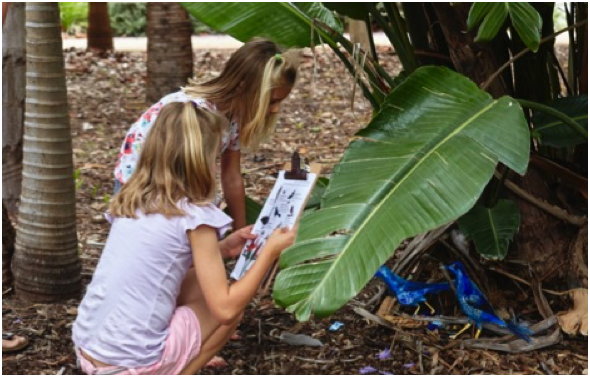
Nature-spotting treasure hunt at the University of Western Australia. Photo credit: Camera Story
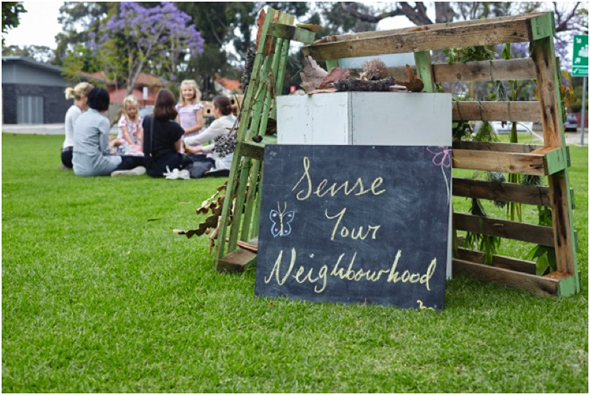
Bringing more than 500 residents together across Australia, from Perth to Brisbane, Cairns to Adelaide. Photo credit: Camera Story
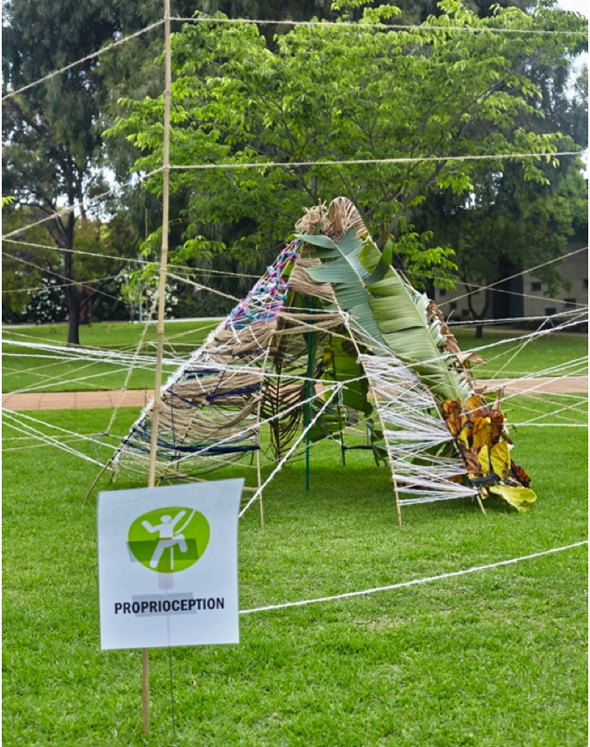
7 Senses Day: Creating connected, sensory focused communities from coast to coast. Photo Credit: Camera Story
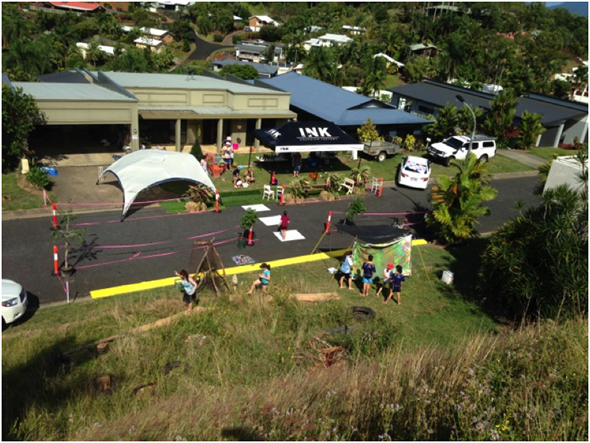
Residential transformation in Pheasant St, Cairns. Photo credit: Simon Mahar
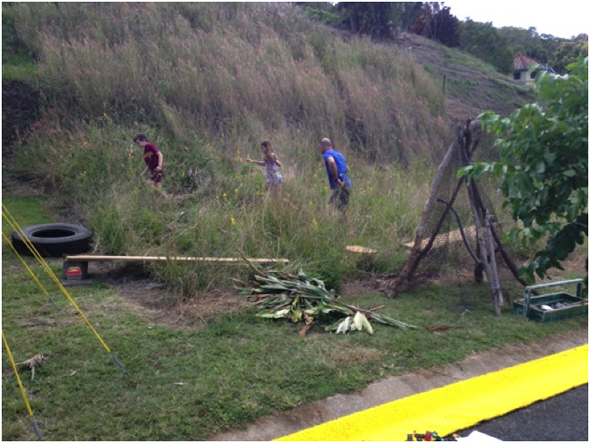
Using the vacant lots on Pheasant Street to create nature inspired vestibular play. Photo credit: Simon Mahar
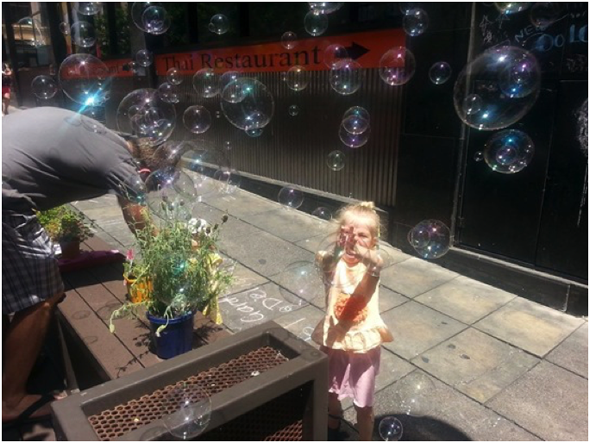
Bubbles enliven the senses no matter the location, even in inner streets of Adelaide!
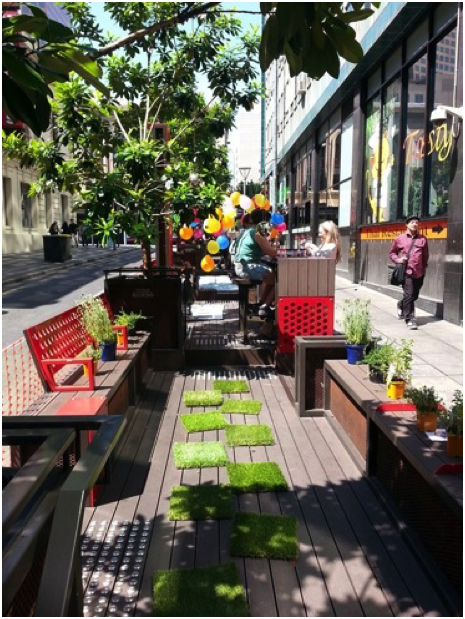
Place activation in inner Adelaide using soft furnishings, scented plants, and engaging games.
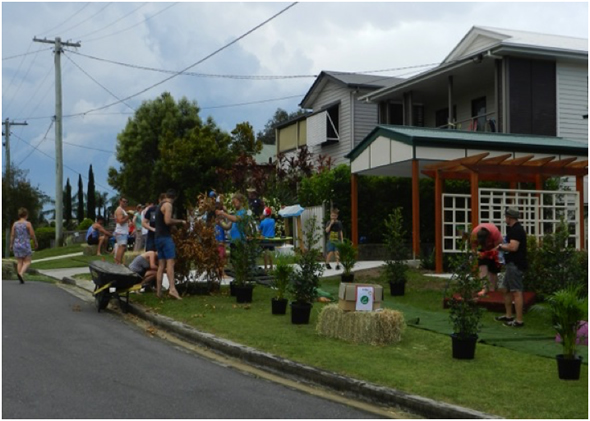
Local community attended the 7 Senses transformation at Everton Park, Brisbane.
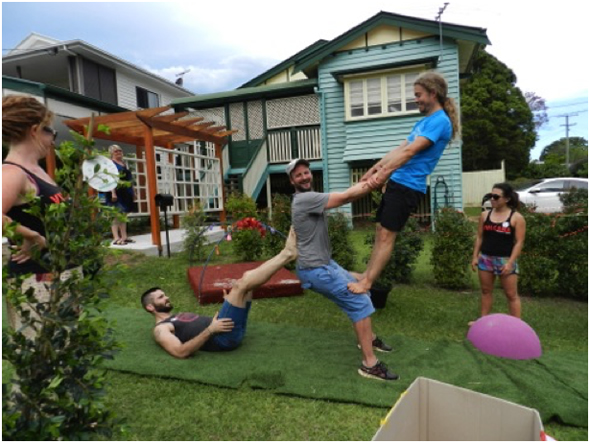
Optimising the front verge at Everton Park, Brisbane, with circus acrobatics.
8) Climbing Tree
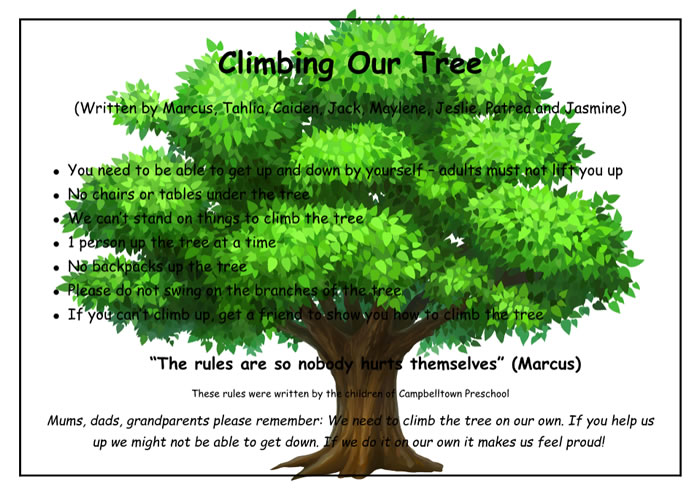
Below is a wonderful example of how an Early Years service supports and manages the climbing of trees.
9) Play in the Streets in London (thanks to Liz Cummins)
London Play is making significant inroads into getting children outside, by making temporary Play Streets across London.London Play's 'Play Streets Program' is a radio interview Paul Hocker, Development Director of Play London, talking about a project in Hackney in London in 2012.
Also the other major influence on this branch of the movement has been 'Playing Out' in Bristol, started up by mums Alice and Amy a number of years ago - which is pretty big now. Their website is also worth a look.
I guess the thing to remember related to our situation in Australia, is that while we have come from a background of lots of open space and home gardens for play (and many still have this). As urban density increases in our cities this is becoming more and more under pressure. Increased floor spaces for houses / smaller blocks / multi-residential living - all mean less outdoor space really close to home. Couple that with the dominance of the car and the same fears Paul talks about in the interview around letting children be independently mobile in their local streets and we're in the same boat.
This is as much a planning issue as anything else, so the opportunity to invite planners, urban designers and landscape architects into the mix on this discussion is important in terms of influencing the future design of city sub-divisions and developments. Also local government too